The course focuses on keeping bees for their own sake, rather than simply for the products of their labour. (Although if there is a surplus of honey, we will be pleased to have some for ourselves!) A revolutionary beekeeping course about sustainable, chemical-free, 'natural' beekeeping, with no heavy lifting. Philip shows you how you can make everything you need, using recycled materials and simple tools. If you are already a keen gardener, you may have considered the idea of having a beehive or two in your garden, but been put off by the cost and complications of conventional beekeeping equipment. Philip will show you how keeping bees can be much easier than you think, while costing much less than you think, especially if you can do simple woodwork yourself.

Philip Chandler, author of 'The Barefoot Beekeeper' introduces you to natural beekeeping, including the theory and practical techniques for a sustainable, organic approach to cultivating Bee bee colonies. You'll learn:

4th, 11th and 18th June 2026
Botanical identification training and survey opportunities in a selection of upland hay meadows. There are three days of free training for beginners, and also botanists wishing to refresh their skills. Wildflower, grasses and surveying 4 June 9:45 am - 4:30 pm. Grasses and sedges identification…
Flexible on demand training - takes 1-2 hours to complete
A practical guide to enhancing and maintaining biodiversity on school or college grounds, this free online training course is aimed at managers of any outdoor setting. The course has been developed by Natural England and Department for Education in collaboration with the National Biodiversity Data…
Courses are run on demand and usually last for 3 days (including assessment) Get in touch on 07855571312 or ctlogue@aol.com
Courses include the following: Safe Use of Pesticides (PA1) Boom Mounted Sprayers (PA2) Variable Geometry Boom Sprayers (PA3) Slug Pellets and Granular Applications (PA4) Hand Held Applicators (PA6) including Application in or near Water (PA6AW), Stem Injection, Stump Treatment, Invasive Weeds…
The course takes on average 4 hours to complete. Upon registration, candidates have full access to course content including a downloadable workbook and HD videos. At the end of course, candidates will answer multiple choice questions.
Himalayan balsam is one of the most widespread and impactful invasive plant species across the UK and Ireland. Unfortunately, it is also a plant that is frequently mismanaged, or ignored until it creates monocultures. This new course, the first of its kind, teaches candidates how to practically…
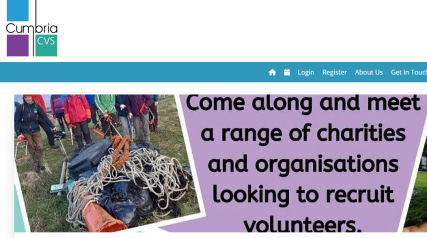
Barrow Volunteering Fair - Wednesday 3rd June 2026

Copeland Volunteering Fair - Thursday 4th June 2026

Myerscough College Open Day 6 June 2026